


La coûteuse prise de conscience d'un CEO obsédé par la tech
Une conviction erronée hante l'hôtellerie de luxe dans sa relation avec la technologie. C'est la croyance séduisante que pour être véritablement « unique », il faut tout construire de zéro, forgeant une solution propriétaire là où aucune n'existe. Je me souviens précisément du moment où cette réalisation m'a frappé avec une clarté aussi douloureuse que coûteuse. Nous avions investi 200 000 € dans l'ingénierie d'une plateforme sur mesure, un moteur numérique que nous pensions être notre avantage concurrentiel.
Mais alors que les bugs « uniques » se multipliaient et que les besoins de maintenance gonflaient, j'ai pris le temps d’observer le « paysage ». J'y ai vu des outils agiles et sophistiqués qui accomplissaient déjà ce pour quoi nous luttions, et ce, avec une grâce que nous ne pouvions égaler. Nous étions tombés dans le piège classique de la suringénierie au détriment de la marque. Dans le segment du luxe, un client ne se soucie pas de la nouveauté du code de votre back-office ; il se soucie de l'essence de la marque, de la narration sensorielle et de la fluidité du parcours. La valeur ajoutée d'un hôtel réside dans ses expériences vécues, non dans son architecture logicielle sous-jacente. J'ai réalisé que mon obsession d'être un « bâtisseur tech » desservait l'âme même des marques que je tentais de servir.
La vanité du code sur mesure face à la puissance de l'architecture de marque
Renoncer à cet investissement de 200 000 € n'était pas un échec de vision, mais une reconquête de notre raison d'être. Chez Influence Society, nous avons déplacé notre focus : de « fournisseur tech », nous sommes devenus une infrastructure de marque. Nous avons reconnu que la véritable valeur d'une agence réside dans le marketing hôtelier créatif et l'innovation centrée sur le design et non dans la maintenance d'un back-office propriétaire qui fonctionne comme une forme de prise d'otage numérique.
Réinventer la roue est un projet de vanité que les hôtels indépendants ne peuvent plus se permettre. Selon le rapport The 2024 State of the Website de Webflow, plus de 50 % des équipes marketing estiment que leur site web n'incarne pas correctement l'identité de leur marque. Lorsqu'une agence se concentre sur la construction de ses propres outils, elle cesse d'honorer la narration visuelle qui fait écho chez le voyageur. Nous avons migré l'intégralité de notre portfolio vers Webflow, car cela nous a permis de devenir des gardiens de l'âme numérique. Notre expertise est désormais mise au service de l'intégration d'une esthétique élégante dans un cadre stable, garantissant que la technologie sublime l'histoire sans l'ombrager.
Évaluer WordPress dans le paysage du luxe moderne
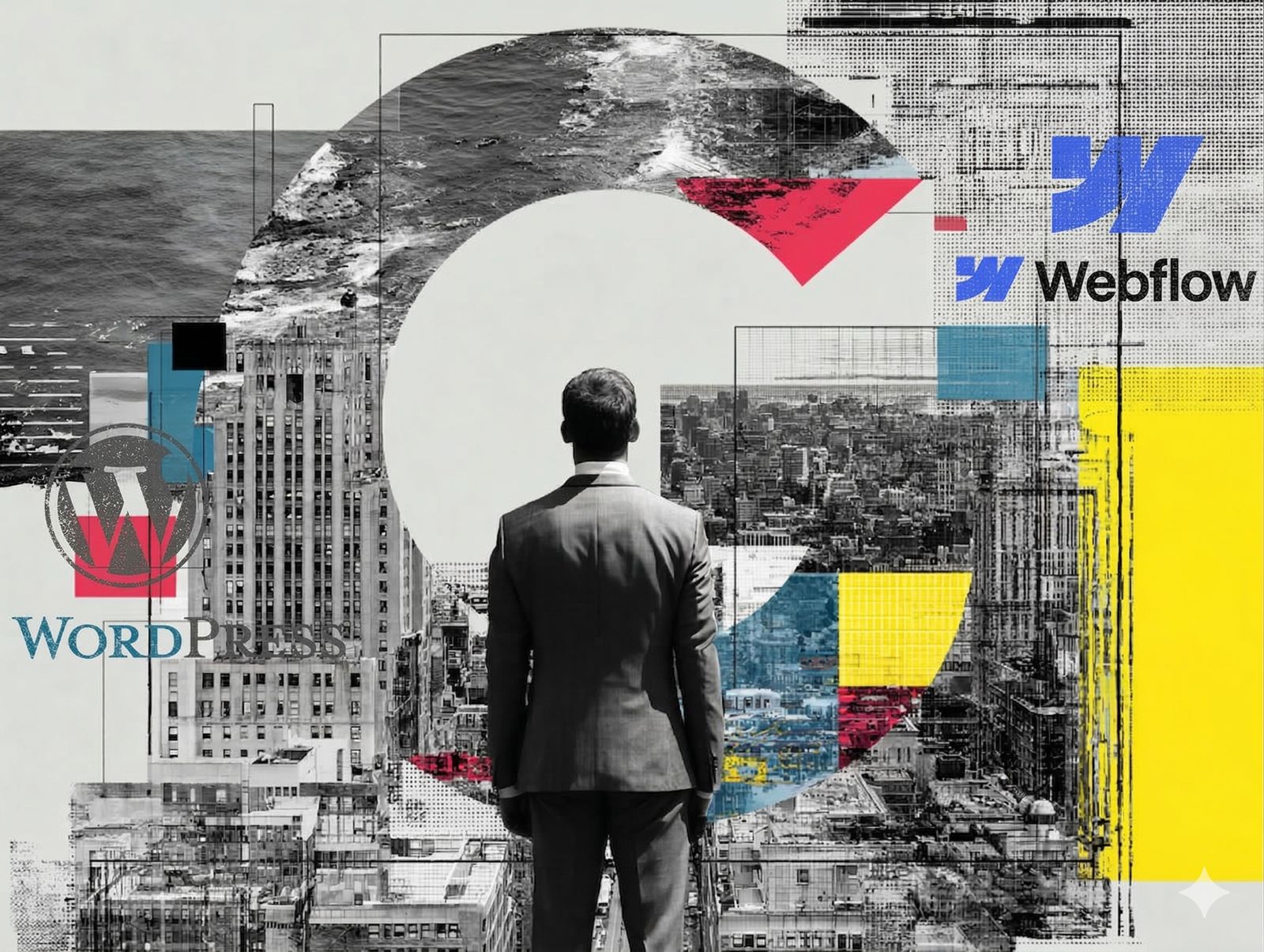
Pendant des années, WordPress représentait le symbole ultime de la liberté numérique. En tant que plateforme open source, elle promettait aux hôteliers un contrôle total. Cependant, atteindre une solution haut de gamme et personnalisée sur WordPress nécessite un hébergement managé, des plug-ins premium et une intervention fréquente de développeurs. Concrètement, le coût total de possession (TCO) pour un boutique-hôtel se situe souvent entre 5 000 et 15 000 $ par an.
De plus, le haut degré de personnalisation requis dans de nombreuses solutions WordPress peut engendrer une dépendance envers l'agence d'origine. Lorsque les agences développent des plug-ins sur mesure, migrer le site vers un nouveau partenaire devient complexe et risqué. Webflow, en revanche, offre une véritable portabilité. Parce que le back-end est un environnement standardisé et haute performance, le client conserve un accès total et la liberté d'évoluer sans perdre son infrastructure sous-jacente. D'un point de vue business, nous aurions pu vouloir « enfermer » nos clients dans notre système. Mais nous avons choisi de les fidéliser par l'excellence de notre service et de nos résultats.
L'architecture open source de WordPress permet l'intégration d'une myriade de plug-ins tiers. Si cela offre une immense flexibilité, cela introduit aussi un défi majeur de gestion et de sécurité pour les 43,5 % de sites qui l'utilisent. Webflow, quant à lui, opère dans un environnement contrôlé et sécurisé.
Le luxe silencieux de la maintenance tout-en-un
Dans l'hôtellerie de luxe, rien n'est plus « anti-luxe » qu'une défaillance de service. Sur WordPress, la nécessité de mises à jour régulières du cœur et des plug-ins introduit un risque d'incompatibilité technique ou de disruption de service. Ces incidents, qui requièrent l’intervention immédiate d’un développeur, peuvent nuire à l'expérience client exigée par le segment du luxe. Webflow élimine cette dette technique grâce à une approche de « technologie invisible ».
La plateforme gère les complexités (certificats SSL, protection DDoS et conformité SOC 2 Type II) tel un concierge silencieux. Cela permet aux responsables marketing hôteliers de recentrer leur énergie là où cela compte : l'expérience client. Le luxe d'une plateforme intégrée, c'est la sérénité provenant d'un uptime de 99,99 %, garantissant que la marque reste aussi inébranlable et fiable que l'établissement lui-même.
La performance comme langage de design
Dans le segment du luxe, la vitesse n'est pas une métrique technique ; c'est une composante du langage de design. Un site au chargement lent paraît lourd, peu raffiné et irrespectueux du temps du client. Alors que 80 % du trafic des sites hôteliers provient désormais du mobile, un design réactif (responsive) et haute performance est une exigence absolue.
En s'appuyant sur AWS et des CDN mondiaux, Webflow garantit que la narration visuelle d'un hôtel (d'une séquence vidéo en haute résolution à la texture du tissu d'une chambre) soit ressentie instantanément, atteignant 95 % du monde en moins de 50 ms.
Le minimalisme et une mise en page épurée sont essentiels. Dans le luxe, les visiteurs ont besoin d'un accès immédiat aux informations pertinentes grâce à une expérience intuitive, sans encombrement. La clarté renforce le funnel sans submerger le visiteur.
Alors que 93 % des équipes marketing ressentent la pression d'innover pour rester compétitives, la vitesse et le SEO technique (que Webflow gère nativement) deviennent le socle. Cela crée l'espace nécessaire pour que l'authenticité culturelle d'une marque puisse rayonner.
Étude de cas : scaler l'âme de la marque
Nous avons mis cette philosophie à l'épreuve avec un groupe innovant, où le défi n'était pas seulement de construire un site, mais de gérer une constellation changeante d'identités. Alors que la marque prenait de l'essor, nous avons conçu 7 sites d'hôtels et 4 sites de restaurants, tous unifiés sous une seule architecture de groupe.
Ce système accorde au client une immense autonomie. Il peut dupliquer des pages pour lancer de nouvelles narrations, archiver les anciennes ou gérer des bases de données globales sans la permission d'un développeur. Pour un groupe en croissance rapide, cette capacité à gérer un storytelling scalable depuis un panneau de contrôle unique change la donne. Cela fait passer le site web d'une brochure statique en une extension vivante de la marque.
Démocratiser la révolution du « Vibe Coding »
Nous entrons dans une ère où l'IA passe du statut de gadget à celui de facilitateur du sens artistique. Des outils comme Webflow Optimize et Webflow Analyze démocratisent l'accès à des analyses sophistiquées qui coûtaient auparavant aux hôtels indépendants plus de 20 000 € par an avec des plateformes spécialisées.
La révolution du « Vibe Coding » nous permet d'utiliser l'IA pour générer des fonctionnalités complexes simplement en décrivant l'ambiance et la fonctionnalité désirées. Cela rend possible une personnalisation automatisée des pages, où les USP (proposition unique de vente) sont mises en avant selon les comportements uniques des clients, augmentant significativement les taux de réservation en direct. En automatisant ces tâches techniques fastidieuses, nous permettons aux équipes hôtelières de revenir à l'essentiel, la touche humaine, utilisant la technologie pour enrichir le parcours client plutôt que pour le distraire.
L'avenir de l'expérience client
Mon parcours, passant du piège du logiciel propriétaire sur mesure à celui de visionnaire du « No-Code », a été guidé par une seule réalisation : un site web d'hôtel n'est pas un projet logiciel, c'est un espace de réception numérique. Tout comme un espace de réception physique doit être raffiné, accueillant et refléter l'âme de la marque, sa version digitale doit être source de créativité et non une lourdeur technique.
Une question à se poser serait donc la suivante : votre CMS actuel est-il un facilitateur de l'histoire de votre marque, ou un poids qui vous retient ? Chez Influence Society, nous privilégions toujours l’espace créatif plutôt que la « plomberie ». Il est temps de reconquérir votre présence numérique et d'aligner votre technologie sur l'excellence de votre expérience client. Votre plateforme actuelle est-elle un sanctuaire pour votre marque, ou une cage pour votre contenu ?