Analytics helps a hotel replace intuition with evidence. By analyzing data from the PMS, the booking engine, the website, campaigns and reviews, a hotel can set rates according to demand, invest its marketing budget in the channels that bring bookings, personalize offers for each type of guest and fix recurring issues in operations. The value lies less in collecting data than in using it for regular decisions.
Key takeaways
- Analytics is useful when each report leads to a decision: rates, budgets, offers or operations.
- Connecting PMS, booking engine, CRM and GA4 data gives a complete view of each channel.
- A short monthly dashboard shared by management, revenue and marketing is more useful than many reports.
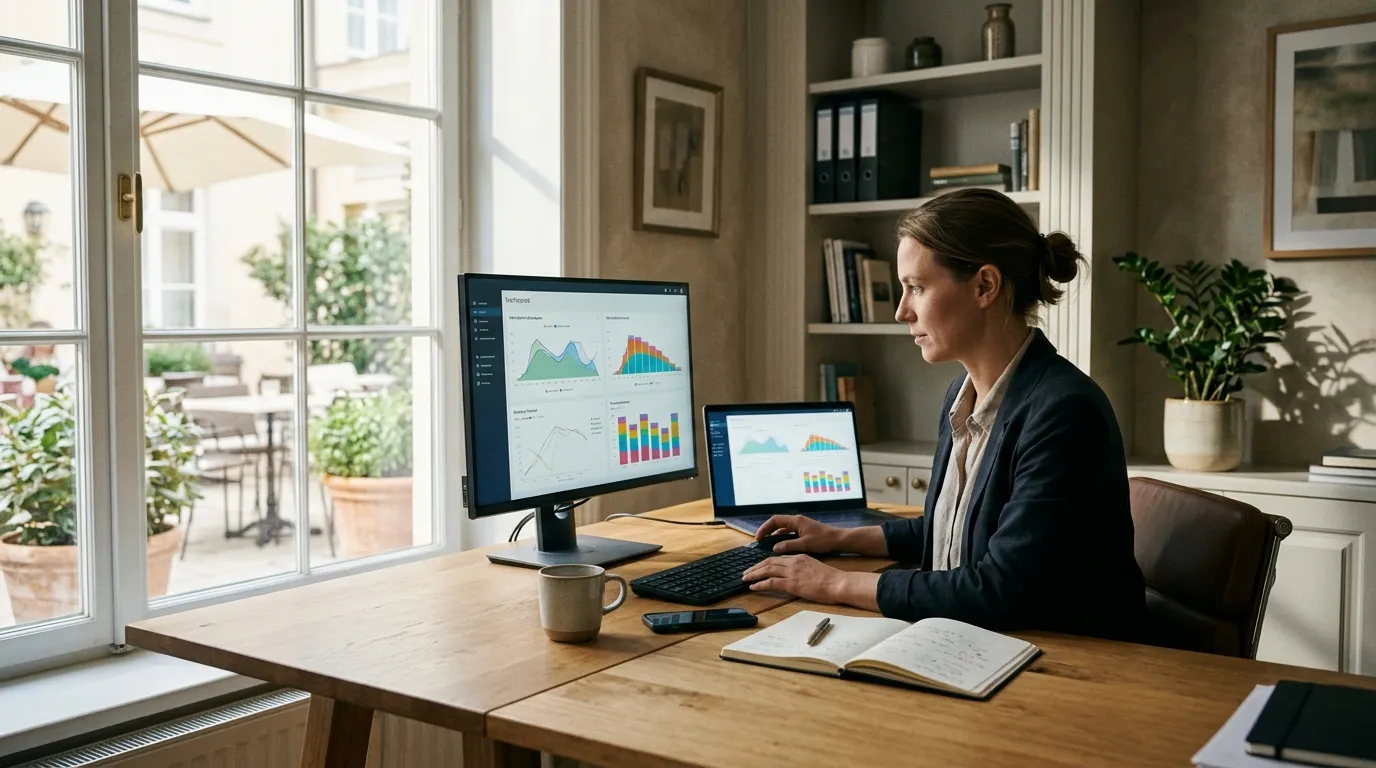
Which decisions does analytics improve?
- Pricing and forecasts: booking pace, events and competitor rates help adjust prices and restrictions. See hotel revenue management.
- Marketing budgets: cost per booking and return by channel show where to invest and where to cut. See how to track hotel bookings in GA4.
- Distribution: the share of direct bookings versus OTAs and the real cost of each channel.
- Guest experience: stay history and preferences in the CRM allow relevant offers and attentions.
- Operations: occupancy forecasts help plan staff, housekeeping and purchases.
- Reputation: review analysis by topic shows what to improve; see how to measure e-reputation.
What does it look like in practice?
- Bookings for a weekend are slower than last year: the hotel launches a targeted campaign or adjusts its rate early.
- An ad campaign brings traffic but few bookings: the budget moves to a better-performing channel.
- Several reviews mention breakfast: the team changes the offer and tracks new reviews.
- Returning guests book mostly in spring: an email is sent to them before that period.
How should a hotel get started?
- Choose a few KPIs linked to goals, such as occupancy, ADR, RevPAR, direct share and cost per booking.
- Check that tracking is reliable, especially on the booking engine.
- Build one monthly dashboard and comment the figures with the teams.
- Decide actions and check their effect the following month.
For definitions and tools, read what hotel analytics is, and see how AI and big data are transforming hotels.
How does Influence Society use analytics for hotels?
At Influence Society, we connect hotels' marketing data to bookings and revenue, share a monthly dashboard and turn the figures into concrete actions on campaigns, content and budgets.
FAQ
What data does a hotel need for analytics?
Mainly PMS data (bookings, rates, occupancy), booking engine and website data in GA4, campaign results, CRM data and reviews.
Does a small hotel need analytics?
Yes, at its own scale. A few indicators followed every month, such as occupancy, ADR, direct share and cost per booking, already improve decisions.
How often should a hotel review its data?
Follow bookings and pace weekly, and review marketing, revenue and reviews in a monthly meeting to decide actions.