AI Max for Search is a set of AI features that Google adds to standard Search campaigns. It finds searches beyond the advertiser's keywords, writes ad text from the website and assets, and sends each user to the most relevant page. Launched in May 2025 and out of beta since April 2026, it is becoming the default way to run Search. For a hotel, it can reach travelers with detailed requests, but without guardrails it can spend budget on the hotel's own brand searches or on irrelevant queries.
Key takeaways
- AI Max combines search term matching, text customization and final URL expansion in one setting.
- Dynamic Search Ads are being retired and upgraded to AI Max from September 2026.
- Brand settings, URL exclusions and search term reviews keep a hotel in control.
How does AI Max for Search work?
- Search term matching: Google uses the keywords, ads and landing pages to match searches the advertiser did not list, including long and conversational queries.
- Text customization: headlines and descriptions are generated from the website, the ads and the assets to fit each query.
- Final URL expansion: Google can send the user to another page of the site, such as a room, an offer or the spa, when it matches the search better.
In 2026, Google announced the retirement of Dynamic Search Ads, which are upgraded to AI Max for Search from September 2026.
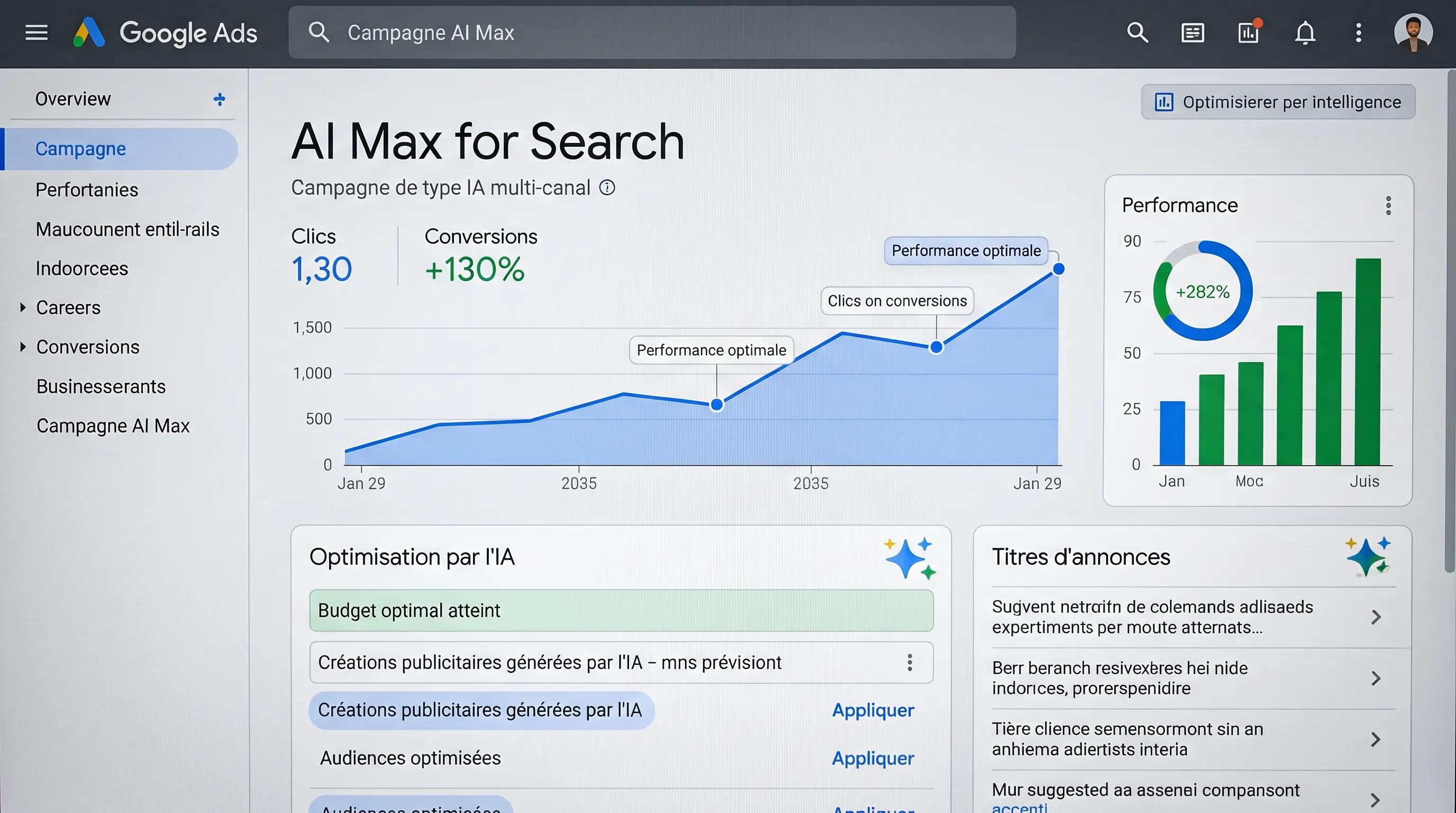
What is the impact on a hotel's brand campaigns?
A brand campaign protects the hotel's name against OTAs at a low cost per click. With AI Max active on a generic campaign, searches containing the hotel's name can be matched there too, at a higher cost and with less precise reporting. Generated text may also use wording that does not match the hotel's tone or current offers.
Which guardrails should a hotel set?
- Brand controls: use brand inclusions and exclusions, or the branded search setting rolling out in 2026, so that brand searches stay in the brand campaign.
- URL exclusions: exclude pages that should not receive ads, such as careers, legal or past events.
- Text controls: review generated assets, remove those that are off-brand and keep key messages in the ads.
- Locations: target the markets the hotel wants, with ad group locations when needed.
- Measurement: track bookings and revenue through the booking engine, and review the search terms report regularly.
Our insight explains a full framework: How to Run AI Max Without Putting Your Brand at Risk. See also Performance Max for hotels.
How does Influence Society use AI Max?
At Influence Society, we test AI Max on hotels' non-brand campaigns, keep the brand in a separate campaign with brand controls, exclude unsuitable pages and judge results on bookings and revenue measured through the booking engine.
Source: PPC Land, "Google Ads gets branded search controls inside AI Max", 2026 (accessed November 2026).
FAQ
Is AI Max for Search a new campaign type?
No. It is a setting inside standard Search campaigns that adds search term matching, text customization and final URL expansion. The campaign keeps its keywords and ads.
Can AI Max hurt a hotel's brand campaign?
It can capture brand searches in generic campaigns at a higher cost. Brand inclusions and exclusions, or the branded search setting, keep those searches in the brand campaign.
Should a hotel turn on AI Max for Search?
It is worth testing on non-brand campaigns with reliable booking tracking, URL exclusions and a regular review of search terms and generated texts.