The Facebook Pixel, now called the Meta Pixel, is a piece of code placed on your website and booking engine that sends visitor actions to Meta: page views, date searches, started and completed bookings. For a hotel, it measures which Facebook and Instagram ads generate bookings and lets you retarget guests who did not finish their reservation.
Key takeaways
- Facebook Pixel and Meta Pixel are the same tool; only the name changed.
- Meta recommends pairing the pixel with the Conversions API, which sends the same events from your server.
- In France and the EU, the pixel may only load after the visitor has given consent.
How does the Meta Pixel work?
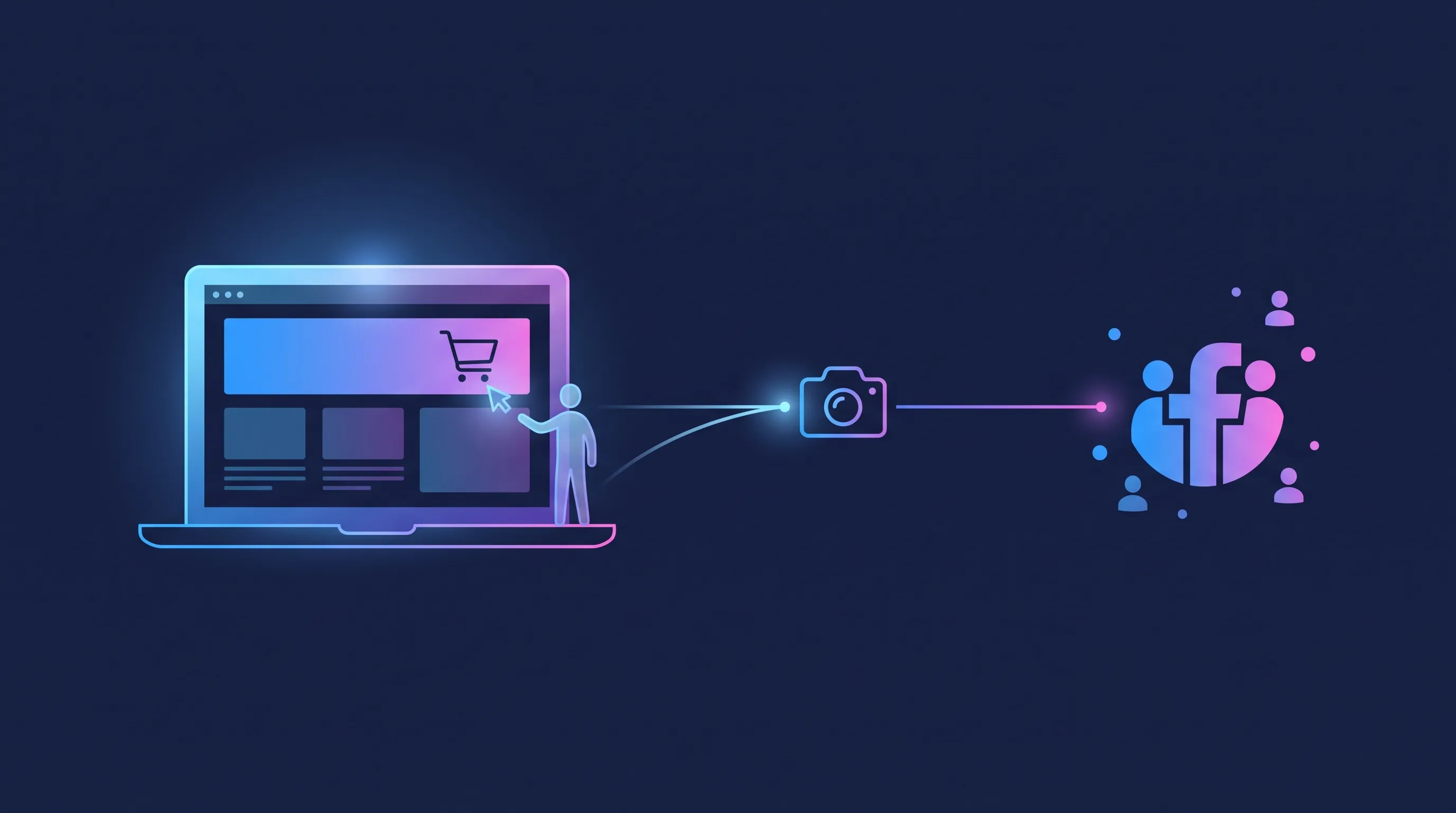
The pixel is a JavaScript snippet added to every page of your site, usually through Google Tag Manager or a native integration with your booking engine. Each time a visitor performs a tracked action, it sends an "event" to Meta with information such as the page, the dates searched or the booking value.
Meta uses these events in three ways:
- Measurement: Ads Manager reports how many bookings, and how much revenue, each campaign generated, which you can compare with your booking engine reports.
- Optimization: campaigns with a booking objective are shown in priority to people whose profile resembles your past guests.
- Audiences: you can retarget visitors who viewed a room without booking, exclude guests who have just booked, or build lookalike audiences from your best customers.
Which events should a hotel track?
For hotels, Meta documents four standard events that follow the booking journey:
- Search: the guest searches for dates on your booking engine.
- ViewContent: the guest views a room or rate.
- InitiateCheckout: the guest reaches the payment step.
- Purchase: the booking is confirmed, with its value and currency.
Meta also recommends passing the check-in and check-out dates and the number of guests. These details make retargeting far more relevant: a guest who searched for a weekend in June can be shown that stay, not a generic offer. As the booking engine usually sits on a separate domain, check that it supports the pixel and sends these events.
What is the Conversions API?
The Conversions API (CAPI) sends the same events from your server or your booking engine's server, instead of the visitor's browser. It is less affected by ad blockers and browser restrictions, so fewer bookings go unmeasured.
Meta recommends a "redundant setup": the pixel and the Conversions API run together, and each event carries the same event ID so Meta can remove duplicates. Many booking engines and tag management tools now offer this server-side connection.
What about consent and GDPR?
In France, the CNIL considers advertising trackers to require prior consent. The pixel must therefore stay blocked until the visitor accepts advertising cookies in your consent banner, and refusing must be as easy as accepting. In practice, the consent tool either loads the pixel only after acceptance, or uses the pixel's consent command, which holds events until the visitor agrees. Test both paths, acceptance and refusal, before any campaign goes live.
Moving tracking to the server does not remove this obligation: a refusal must also apply to the events sent through the Conversions API. The same principles apply to your guest databases.
How does Influence Society set up the pixel?
At Influence Society, we check the full chain before launching a campaign: consent banner, pixel on the website and booking engine, Conversions API and deduplication, then a test booking to confirm that each event arrives with its value. Only then do we build audiences and choose the ad formats. See also whether social media ads work for hotels.
Sources: Meta for Developers, Hotel Ads events and Handling duplicate Pixel and Conversions API events; CNIL, cookies and other trackers FAQ (consulted October 2026).
FAQ
Are the Facebook Pixel and the Meta Pixel the same thing?
Yes. The tool was renamed after Facebook's parent company became Meta in 2021. It works the same way and is managed in Meta Events Manager.
Do you still need the pixel if you use the Conversions API?
Yes, Meta recommends using both. The pixel captures browser signals, the Conversions API secures the measurement, and deduplication prevents counting a booking twice.
How can you check that the pixel works on the booking engine?
Use the Meta Pixel Helper extension and the "Test events" tab in Events Manager, then make a test booking. Each step, up to Purchase, should appear with its value.