Content marketing for a hotel means creating useful content (destination guides, blog articles, videos, newsletters and social posts) that attracts travelers while they plan, builds the brand and brings them to book direct. Unlike advertising, the content stays on the hotel's own channels and keeps working over time.
Key takeaways
- Good hotel content answers travelers' real questions: what to do, when to come, how to get there, which room or offer to choose.
- Google asks for helpful, reliable, people-first content; AI assistants also favor clear answers and verifiable facts.
- An editorial calendar built on seasons and events keeps publishing regular without rushing.
Why does content marketing matter for a hotel?
Travelers spend weeks planning a stay, reading guides and comparing destinations before they choose a hotel. Content lets the hotel be present during that phase, on Google, in AI answers and on social media, instead of appearing only at the price comparison stage. It also gives the hotel something to say in its newsletters and social posts, and earns links and mentions that support its SEO.
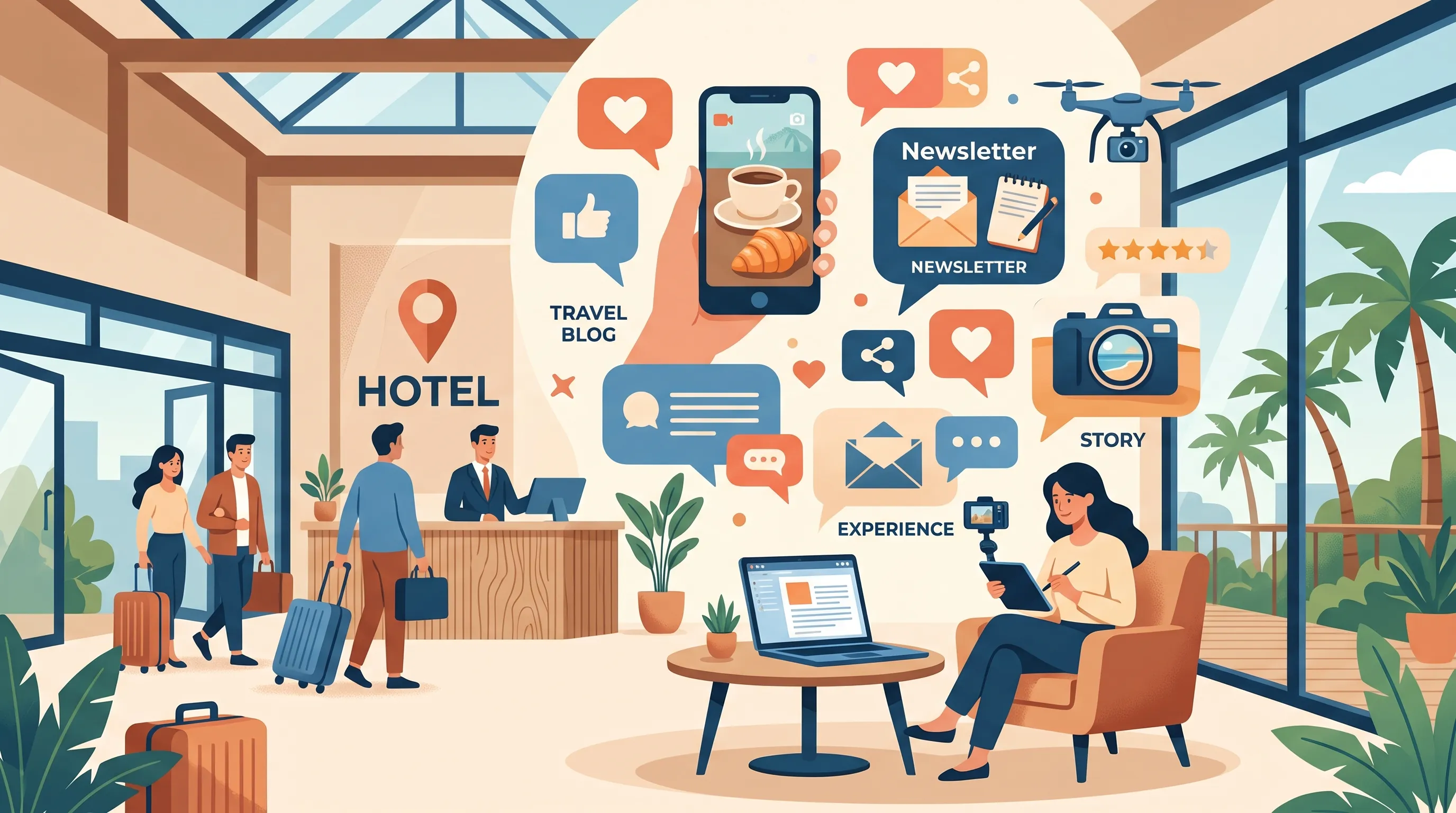
Which content formats work best for hotels?
- Destination guides: the neighborhood, restaurants, walks and seasonal activities, written by the team that lives there.
- Event pages: festivals, fairs, ski season or holidays, published early enough to rank.
- Experience stories: the chef, the spa, the architecture, the people behind the hotel.
- Practical answers: access, parking, families, pets, accessibility, written as clear questions and answers.
- Video and photo: short formats for Instagram and TikTok, longer ones for YouTube and the website.
- Newsletter: to bring past guests and subscribers back to the website.
How do you plan hotel content?
Start from the year: high and low seasons, local events, offers to push. Plan each piece two to three months before the moment it targets, then adapt it for each channel. Our article on the editorial calendar explains the method, and the one on social networks for hotels helps choose where to publish. Link articles to each other and to room and offer pages with good internal linking.
How does content marketing work with AI search?
AI assistants answer travelers' questions by citing sources they trust. Pages that open with a direct answer, use questions as headings, give dated facts and show real local knowledge are easier to cite. This is the basis of GEO for hotels: the same useful content serves Google, AI assistants and guests.
How do you measure content marketing results?
- organic visits to content pages and the searches that bring them;
- clicks from content to room, offer and booking pages, and assisted bookings;
- newsletter sign-ups and social engagement;
- mentions of the hotel in AI answers on its key topics.
How does Influence Society create content for hotels?
At Influence Society, our editorial team writes in English and French for luxury and lifestyle hotels: destination guides, articles, newsletters and SOCIETIES Magazine. We start from search and AI questions, work with the hotel team to bring real local knowledge, and adapt each piece for the website, social media and email.
Source: Google Search Central, Creating helpful, reliable, people-first content (accessed November 2026).
FAQ
Does a hotel need a blog?
Not necessarily under that name, but it needs regular content: destination guides, events and practical answers. A blog or journal section is the simplest way to publish and organize them.
How often should a hotel publish content?
Regularity matters more than volume. Two to four well-researched pieces a month, planned around seasons and events, usually do more than daily posts written in a rush.
Can a hotel use AI to write its content?
AI can help with research, outlines and translations, but each piece needs the hotel's real knowledge, a human edit and accurate facts. Google judges content on its usefulness, not on how it was made.