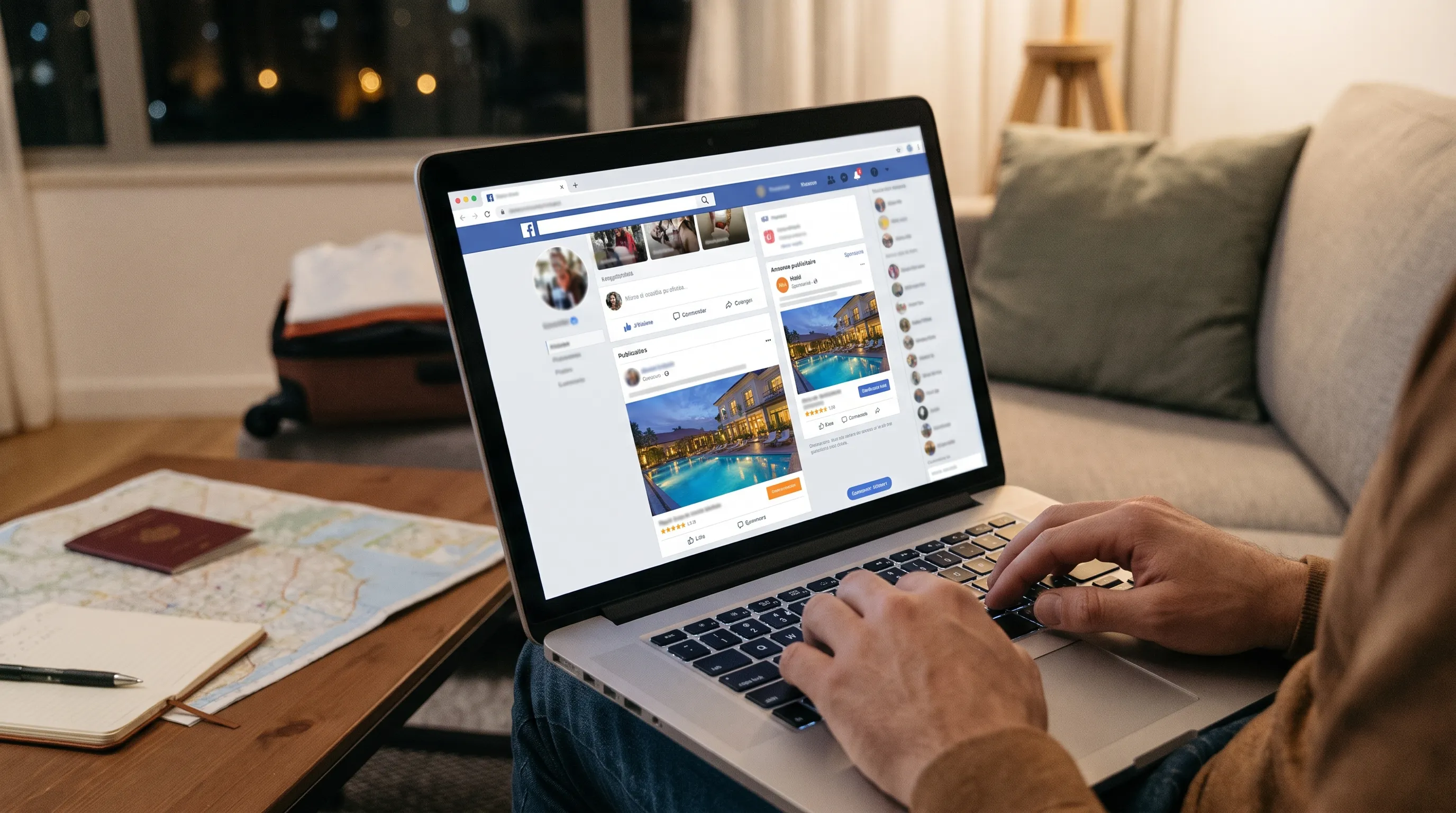
Remarketing, or retargeting, means showing ads to people who have already visited the hotel's website, started a booking or interacted with its social accounts. Most travelers compare several hotels before booking; remarketing reminds them of yours at the right moment, often with a reason to book direct.
Key takeaways
- On Google Ads, a website visitor list can keep people for up to 540 days; the default is 30 days.
- On Meta, website audiences built with the pixel cover up to 180 days.
- In the EU, remarketing only works on visitors who have given consent: tracking and consent mode must be set up first.
How does remarketing work for a hotel?
A tag placed on the website and the booking engine, such as the Google tag or the Meta pixel, records visits and actions: rooms viewed, dates searched, booking started or completed. These actions feed audiences that campaigns can target, or exclude. Past guest lists from the CRM can be added as well, as long as guests agreed to receive marketing.
Which audiences and windows should a hotel use?
- Booking abandoners, 1 to 7 days: they searched dates but did not book; show the same dates, the direct rate or a reassurance such as flexible cancellation.
- Engaged visitors, 8 to 30 days: they looked at rooms or offers; show the experience, reviews and member benefits.
- Past visitors, 31 to 180 days: useful for seasonal hotels, before the next season opens.
- Past guests: invite them back with a returning guest offer, and exclude them from prospecting campaigns.
Always exclude people who have just booked, and cap frequency so the ads stay elegant rather than insistent.
Where can a hotel run remarketing?
On Google, remarketing works on Search (bids adjusted for past visitors), YouTube, Display and inside Performance Max. On Meta, it runs on Instagram and Facebook, with dynamic ads that can show the rooms and dates a visitor looked at. Our article on social ads for hotels explains how they fit into the mix.
What are the rules for remarketing in Europe?
Under GDPR and ePrivacy rules, advertising tags can only fire after the visitor accepts cookies. Google requires Consent Mode v2 for advertisers using audience features with European traffic, and a consent banner must offer a real choice. Lists will therefore be smaller than the traffic: well-designed consent and server-side tracking help keep them useful.
How does Influence Society run remarketing for hotels?
At Influence Society, remarketing is part of every direct booking plan. We set up tags and consent on the website and booking engine, build audiences by stage of the journey, write ads that match the hotel's tone, and measure the cost per direct booking against the commission the same stay would have cost through an OTA.
Source: Google Ads Help, How your data segments work (accessed November 2026).
FAQ
Is remarketing allowed under GDPR for a hotel?
Yes, with the visitor's consent. Advertising tags must only fire after cookies are accepted, and past guest lists can be used only if guests agreed to receive marketing.
How long should a hotel retarget website visitors?
It depends on the booking window. Booking abandoners deserve a short, strong push over a few days; for resorts booked months ahead, windows of 90 to 180 days make sense.
Does remarketing work on Google Search?
Yes. Visitor lists can be added to search campaigns to raise bids or adapt ads when a past visitor searches again, for example for the destination or the hotel's name.