Why the Old Playbook is Breaking
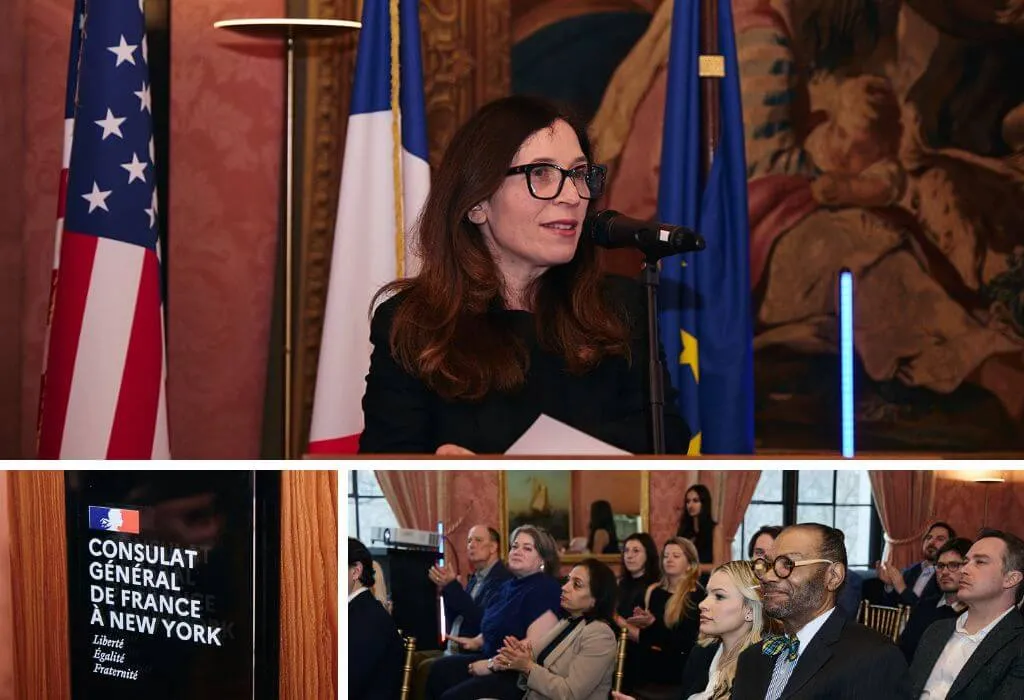
On February 19, 2026, we hosted the latest edition of SOCIETIES at the Consulate General of France in New York, bringing together leaders and executives from across the lifestyle and luxury hospitality sector. The conversations throughout the afternoon highlighted a clear turning point for the industry. For years, hotels have relied heavily on a single, familiar strategy to maintain their bottom line: driving up the Average Daily Rate (ADR).
That era has ended. We have officially entered the “New Reality of Hotel Economics,” where the old playbook isn't just outdated, it’s breaking.
As we dissected the data throughout the afternoon, the structural shifts became undeniable. ADR growth no longer guarantees profitability. We are being squeezed by a vice of persistent cost pressures: skyrocketing labor, insurance premiums, and energy costs, compounded by the weight of structural debt. This is not a temporary hurdle; it is a fundamental shift in our financial landscape. Perhaps most critically, we have hit the ceiling. There is a hard limit to how much we can push prices before we erode demand. To thrive in 2026, we must stop obsessing over room rates and start looking at the assets we already own with surgical precision.
Finding Revenue in the “Invisible”
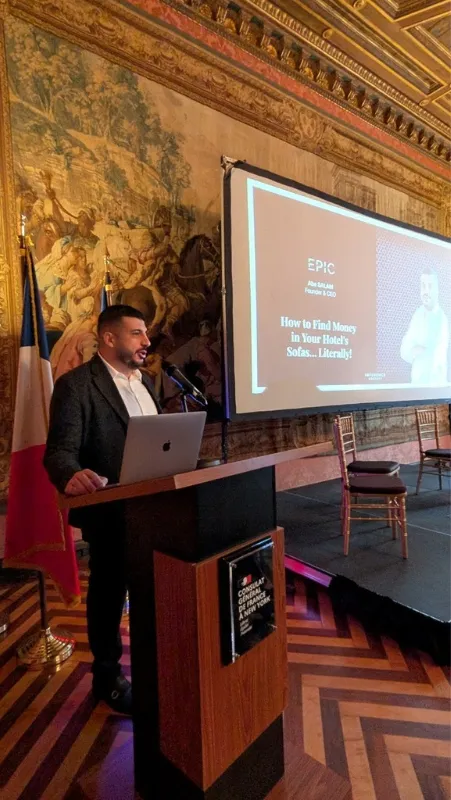
The most provocative challenge of the day came from Abe Salam, Founder and CEO of EPIC Revenue Consultants. He introduced a concept that should be a mandate for every luxury CEO: “Sofa Money.” It is a philosophy of finding revenue in the “invisible” gaps of a property.
The logic is lean and irrefutable: “The next dollar of profit will come from optimizing existing assets, not just selling more rooms.” This is a mindset shift. Hotels traditionally sell “nights,” but operations run 24/7.
One example is Content Creation Rooms: Dedicated, high-aesthetic spaces equipped for influencers and businesses who need professional-grade filming environments, ensuring they have a designated space without disrupting the calm of other guests.
To bridge the gap between revenue and true profitability, we must view our properties through a new lens. If a square foot creates value, it deserves a pricing strategy.
During our sessions, we identified four specific areas you walk past every day that are frequently neglected:
- Lobbies: These are often treated as beautiful social hubs that are usually free. In the new economy, a lobby is under-monetized real estate waiting for a purpose.
- Rooftops: Most rooftops remain entirely underutilized until the late afternoon. This is “dead time” that could be yielding profit through curated daytime access or private business micro-experiences.
- Meeting Rooms: Most are still priced with outdated commercial strategies; locked into full-day or half-day blocks that ignore the modern traveler’s need for flexible, hourly luxury.
- Courtyards: Beautifully designed, yet frequently used for only a tiny fraction of the day.
By identifying these under-monetized assets and under-used time, we move away from the “night-seller” model and toward intelligent yield management of every square foot.
The Three Shifts in Content Strategy

Carrie Demarte, Dir. of Sales Marketing at The Surrey
Krishnan Kaushal, Social Media Marketing Manager, The Pierre NY
Alix Padnos-Leon, Dir. of Marketing, Baccarat Hotels & Resorts
As guest discovery moves further away from our control, our digital strategy must adapt. Alex Pensyl of Curacity, Alix Padnos-Leon of Baccarat Hotels & Resort, Carrie Demarte of The Surrey, and Krishnan Kaushal of The Pierre New York highlighted a critical truth: content is no longer a marketing checklist; it is the driver of brand strategy.
We are currently navigating three seismic shifts:
Context: The Death of the Homepage-First Strategy
Discovery has fragmented. Your future guests are finding you through newsletters, travel media, and AI-driven platforms like ChatGPT or Google’s search overviews. Many will make a booking decision without ever visiting your homepage. Your brand story must be present and credible in the places where they already consume information. In this landscape, visibility depends on credibility, not just volume.
Coherence: Fighting the AI Blur
The explosion of generative AI has led to a “blurring of brand voices.” When an algorithm can write a “decent” hotel description, inconsistency becomes a brand killer. To remain distinct, leading properties are moving away from ad-hoc posts and toward a rigorous message framework. By using tools like a Content Hub, hotels can align their voice across media coverage, website copy, and seasonal offers, ensuring the brand sounds like the same person across every touchpoint.
Credibility: The Revenue Power of Storytelling
AI can generate headlines, but it cannot generate trust. Guests in 2026 are searching for “trustworthy signals”, namely the substance that only comes from professional editors and journalists. Editorial coverage builds a level of confidence that an ad can never reach. Critically, attribution technology now allows us to connect this storytelling directly to bookings. We can finally prove that a well-placed story isn't just “PR”; it’s actually a high-performing sales channel.
Micro-Experiences and the Wellness Advantage of 2026

The hotel of the past was defined by the room; the hotel of 2026 is defined by the intention of the experience. Anne-Sophie Baret, a visionary Wellness Experience Designer, shared how wellness has transitioned from a basement amenity to a primary competitive advantage.
In our ultra-connected, time-starved society, travelers are no longer looking for constant stimulation; they are desperately seeking to slow down, disconnect, and find a “sensorial reset”. This demand for “high-value, efficient luxury” is being met by a variety of wellness experiences: highly intentional, bookable sessions that provide practical value to the guest while maximizing yield during those “dead time” hours we previously ignored.
Aligned with this shift is Abe Salam’s “Sofa Money”, suggesting, for example, Business Micro-Experiences.
As Anne-Sophie and Abe described it to us, we are seeing a surge in 2026 for these intentional offerings:
- Day-Use Recovery Rooms: Luxury spaces for travelers who need a private sanctuary to simply rest and recharge for three hours, not twenty-four.
- Paid Quiet Zones & Sleep Sanctuaries: Serene, bookable areas for focused work, alongside rooms engineered specifically for silence and “digital detox” in an otherwise high-traffic property.
- High-Impact Wellness Micro-Sessions: Targeted sessions that fit into a guest’s busy schedule, turning a spa into a flexible productivity and recovery hub. Rather than a standard two-hour massage, this includes accessible, science-backed treatments like breathwork, sound healing, and cold therapy.
- Social Wellness Hubs: Transforming traditional amenities into communal spaces—such as social bath houses, listening bars, or reading havens—designed to combat digital isolation and foster genuine human connection.
By integrating these practical experiences, wellness is no longer just a passive offering; it becomes a structured, revenue-generating part of the daily guest journey.
Winning the War on Fragmentation with AI
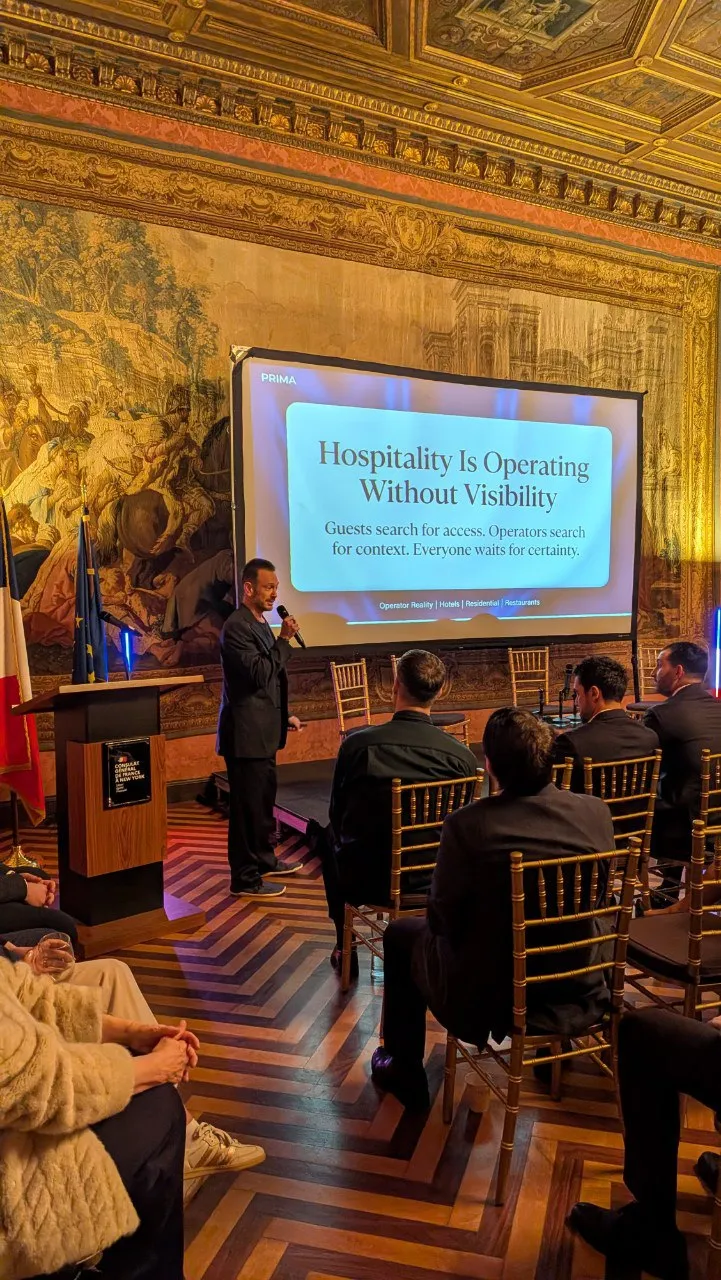
Hotels are exceptional at monetizing what happens inside their walls (rooms, F&B, spas, and events). But Alex Zhardanovsky, CEO of PRIMA, highlighted a massive $50 billion blind spot in the luxury sector: the moment a high-value guest walks out the front door to book a restaurant, a yacht, or nightlife, the hotel participates in exactly none of that upside.
The current model is fundamentally broken: the hotel funds the demand (paying heavily to acquire the guest), but the city's ecosystem captures the spend. Meanwhile, the guest experience devolves into a fragmented scavenger hunt—asking concierges, texting friends, and waiting for backchannel confirmations—while external operators are overwhelmed by contextless inbound requests via SMS, WhatsApp, and Instagram.
The greatest barrier to profitability here isn't a lack of demand; it is structural fragmentation. This is where AI and platforms like PRIMA become the essential “glue.” They replace the chaotic backchannels with one structured channel offering shared visibility. Hotels can now offer guests seamless, direct access to the best external experiences in the market. In return, operators receive prioritized, structured demand with clear guest context.
Most importantly, this allows the hotel to finally participate in the revenue generated beyond the room. By using AI to connect this ecosystem, hospitality no longer stops at the lobby doors but extends into the city, creating a powerful new amenity for the guest and a trackable, frictionless revenue stream for the hotel.
A New Definition of Luxury Value
The future of hospitality is not found in pushing an already-taxed ADR. It is found in a deeper, more exact understanding of intent, purpose, and asset yield. We can no longer wait for a rising market to lift our properties. We must be the architects of our own profitability.
Luxury in 2026 is defined by how well a hotel values a guest’s time and how intelligently it monetizes its own space. We must transition from being “night-sellers” to “experience-yielders.”
As you return to your property, I leave you with one question: Which of your “under-questioned assumptions” about your lobby, your rooftop, or your data is currently standing in the way of your hotel’s true revenue potential?
—
Guest Speakers of SOCIETIES NYC
- Abe Salam, Founder & CEO, Epic Revenue Consultants
- Sébastien Felix, Founder & CEO, Influence Society
- Anne-Sophie Baret, Wellness Experience Designer, Club Med Fusion Creator
- Alex Pensyl, Sr. Director of Growth, Curacity
- Alix Padnos-Leon, Dir. of Marketing, Baccarat Hotels & Resorts
- Carrie Demarte, Dir. of Sales Marketing at The Surrey, A Corinthia Hotel
- Krishnan Kaushal, Social Media Marketing Manager, The Pierre New York
- Alex Zhardanovsky, CEO, PRIMA